
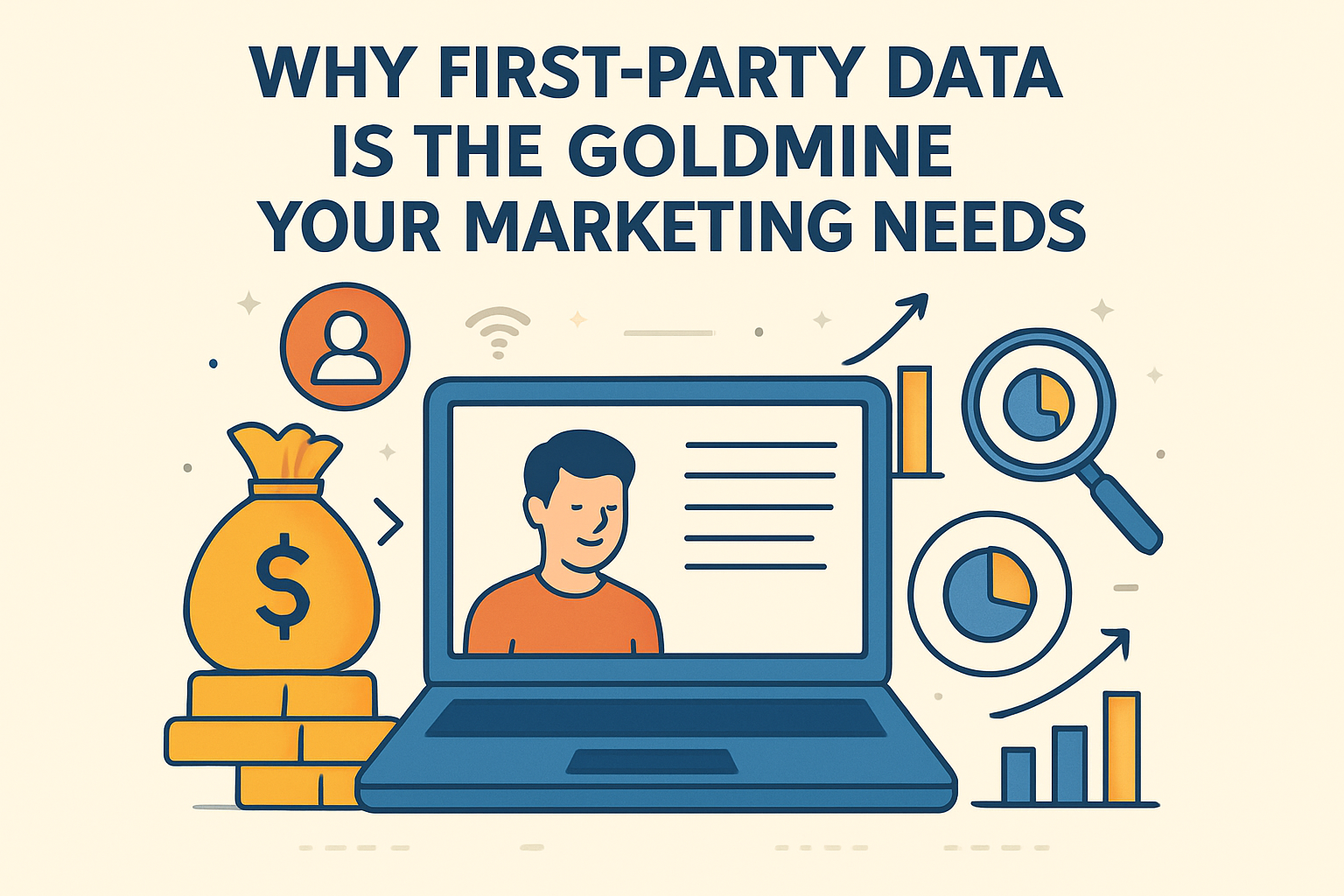
In the era of data-driven marketing, businesses are constantly seeking ways to understand their customers better. While third-party data was once the backbone of digital campaigns, privacy regulations, browser restrictions, and changing consumer expectations have made first-party data the real goldmine for marketers.
What Is First-Party Data?
First-party data is the information you collect directly from your audience — through your website, apps, emails, social media interactions, purchase history, surveys, and loyalty programs. Unlike third-party data, which comes from external sources and may be less reliable, first-party data is accurate, consented, and unique to your brand.
Why First-Party Data Matters
1. Enhanced Personalization
Knowing your customers’ preferences and history enables hyper-personalized experiences that boost loyalty and conversions.
2. Cost-Effective Marketing
Collecting first-party data organically reduces dependency on costly third-party providers, improving overall ROI.
3. Data Privacy & Compliance
Consent-based data ensures your brand remains compliant with evolving privacy regulations like GDPR and CCPA.
4. Accurate Insights
Direct, authentic user data helps refine strategies, optimize journeys, and predict trends more precisely.
5. Future-Proofing
As cookies disappear, owning your data ensures your campaigns stay effective and competitive.
How to Leverage First-Party Data Effectively
- • Create valuable touchpoints — like newsletters, surveys, and loyalty programs.
- • Centralize data in a CRM or CDP for a unified customer view.
- • Segment and personalize campaigns using behavioral insights.
- • Test and optimize campaigns continuously.
- • Be transparent about data usage to build user trust.
The Bottom Line
First-party data isn’t just information — it’s the foundation of a sustainable marketing strategy. It fuels personalization, compliance, and growth.
Your customers are your richest source of insights — harness it wisely to build long-term success.